
Paytm, the country's leading fintech player which had to shut its payment bank business following regulatory action, is revisiting its business strategy including partnership with lenders. Also, the company's founder and chief executive officer (CEO) Vijay Shekhar Sharma has decided to oversee the day-to-day operations with all the major verticals reporting directly to him now. "The thing on top of everyone's agenda is getting the core businesses back on track," a person in the know said.
As many as 140 million customers of HDFC Bank and Axis Bank are expected to face interruption in banking services in the weekend due to the former's system upgrade and the transition of Citi India business to the latter. Both the banks have notified their customers about the interruption in services. HDFC Bank - the country's largest private sector lender with 93.2 million customers - had announced that it will undertake a system upgrade on July 13, wherein it will migrate its core banking system (CBS) to a new engineered platform to enhance customer experience.

Yes Bank on Saturday reported over two-fold jump in standalone net profit at Rs 452 crore for March quarter 2023-24, primarily due to benefits on the provision front. In the year-ago quarter, the bank logged a profit of Rs 202.43 crore. The private sector lender benefitted from write-back on income tax and interest on income tax returns, but the profits were limited by its inability to comply with the mandatory priority sector lending (PSL) requirements, its management said.

The RBI has this year cut interest rates by 110 basis points in four instalments but banks have passed only a part of it to borrowers. Before the last reduction earlier this month of 35 basis points, the bank on an average had passed only 29 basis points out of 75 basis points cut affected during 2019.

Drop us a mail at getahead@rediff.co.in and our expert, Harsh Roongta, will answer your home loan queries.
The major beneficiaries of loan recasting will be sub-Rs 500 crore corporate exposures and retail exposures, which were earlier expected to see the highest increase in NPAs in percentage terms.

'We may see little softness in liquidity position after the stabilisation of the government.'

While HDFC Bank has vowed to recoup its lost market share in the credit card segment in three to four quarters by aggressively sourcing new cards, brokerages believe it is a little hard to come by, given how competitive the landscape has become, with other players in the market becoming equally aggressive to gain market share. Kotak Institutional Equities in its report on Monday said, "We would like to believe that the recovery in market share is likely to be gradual, if any. "All the key players, including Axis Bank, are now willing to expand their credit card portfolios as they have tested quite well against Covid-19."

India Inc continued to grapple with muted revenue growth in the September 2024 quarter (Q2FY25) and witnessed a decline in margins and profits. The headwinds were especially severe for non-financial companies, while banking, financial services, and insurance (BFSI) firms significantly outpaced the rest of the corporate sector. The total profit of 1,353 listed companies that have released their Q2FY25 results thus far dropped by 0.6 per cent year-on-year (Y-o-Y) - the first cumulative earnings decline in eight quarters.

At the heart of the matter are revenue-share rental agreements that retailers are mooting over fixed-rent contracts that they say are unsustainable, given the revenue loss they've suffered during the lockdown.

According to Fitch, the scheme could open a window for banks to build capital buffers while putting off full recognition of COVID-19 pandemic's impact on loan portfolios, but is reminiscent of a strategy adopted over 2010-2016 that delayed and exacerbated problems for banks.

Banks cut interest rates, processing fees; offer discounts for online shoppers.
Kotak Mahindra Bank on Saturday reported a 25 per cent growth in its March quarter net profit at Rs 5,302 crore, limited by a drop in the core income due to narrow interest margins. On a standalone basis, the city-headquartered lender's Q4 net profit grew 18 per cent to Rs 4,133 crore. The FY24 consolidated net profit grew 22 per cent to Rs 18,213 crore.
ICICI Bank puts up a good show in Q4.

A Reserve Bank panel has suggested a benchmark floating interest rate, especially or home loans, to bring greater transparency in the pricing of credit.

Stressed MSME borrowers would be eligible for restructuring of debt, if their accounts were classified standard.

Mortgage lender HDFC on Wednesday said it has approved the highest ever retail home loans of over Rs 2 lakh crore in 2021-22. The demand for these loans was from across the country, HDFC said in a statement. HDFC managing director Renu Sud Karnad said, "In over four and half decades, I have not seen a better time for the housing sector than now due to lower interest rates, stable property prices, government's thrust on affordable housing, improved affordability, favourable demographics, increasing urbanisation and rising aspirations." The residential real estate segment will continue to see strong traction going forward, as the demand for housing is not just pent up demand but is a structural one, she said.
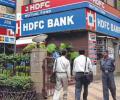
But there are challenges, observes Tamal Bandyopadhyay.

The country's largest lender State Bank of India on Monday said it has reduced interest rates on home loans by up to 10 basis points (bps) and is offering loans starting from 6.70 per cent rate. The new rates are based on loan amount and CIBIL score of the borrower, and are available till March 31, 2021, according to a statement. The bank said the home loan interest rates will start from 6.70 per cent for loans up to Rs 75 lakh and 6.75 per cent for loans in the range of Rs 75 lakh-Rs 5 crore.

Unlike the earlier experience post the global financial crisis, where nearly 90 per cent of the restructuring happened in the corporate loans, the non-corporate segment, which includes small businesses, agricultural loans and retail lending, will account for a higher share this time.

Adopting overly aggressive strategies without considering risk could lead to significant losses during the next downturn.

The public sector lenders saw the biggest rebound in inquiries in July and August 2020, most likely because they were early in recommencing operations than their private and finance counterparts.

The sobering news is that retailers - including big firms like Reliance Retail - and exhibitors are contemplating issuing force majeure notices to shopping malls and real estate owners, and are in discussions with them to formulate an action plan for sharing the financial burden of the lockdown.

Credit-to-deposit (CD) ratio of major public sector and private sector banks during the October-December quarter of FY24 inched up as compared to the previous quarter though government-owned lenders reported a lower rate than their private peers. CD ratio is the ratio of the funds that banks lend as compared to the funds raised in the form of deposits. The CD ratio of top public sector banks (PSBs) - State Bank of India, Punjab National Bank, Bank of Baroda and Canara Bank - was lower than their private counterparts.

You can get a lumpsum sanctioned, but you may draw only part of it and pay interest on the amount used.
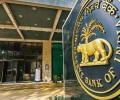
Prime Minister Narendra Modi will on Friday launch two schemes of the Reserve Bank of India (RBI) that may go a long way in changing how the household sector invests, and complains if anything goes wrong with their savings. These schemes - retail direct and an integrated ombudsman - will be launched by the Prime Minister virtually, in the presence of Finance Minister Nirmala Sitharaman. With the introduction of retail direct, a common man can directly take a position in government securities (G-Sec), considered to be the safest asset class a sovereign can offer.
Linking all new floating rate loans to an external benchmark won't impact existing borrowers, so customers who have taken long-term home loans recently should watch things carefully, say Joydeep Ghosh and Sanjay Kumar Singh.

>It's not easy to predict the market. But there are at least two positive factors to back the PSU banks, explains Tamal Bandyopadhyay.

While the stress is lower than projections, it would be higher than what we saw last year because of the pandemic: Axis.
Moody's Investors Service on Wednesday said the outlook for global banks for 2024 is negative as central banks' tighter monetary policies have resulted in lower GDP growth. It said Indian banks' profitability will increase further on lower provisioning expenses and robust growth in higher-yielding retail segments. "Our outlook for global banks for 2024 is negative as central banks' tighter monetary policies have resulted in lower GDP growth.

Reports suggest state-owned banks have lapped up Rs 40,000 crore, so far, using both bonds and equity instruments. The question, though, is whether there will be a perceptional change for PSB stocks.

The CBI has been carrying out searches at various locations for the past few days to locate assets acquired from the proceeds of the scam, officials said.

Commercial banks in the country continued with their improving asset quality trend in the October-December 2021 quarter with slippages remaining under control coupled with healthy recoveries and upgradation of asset classification. The 28-listed banks reported improvement in bottom line with net profits rising 64.1 per cent year-on-year (YoY) and 21.5 per cent sequentially. This is mostly on account of a fall in provisions and contingencies.
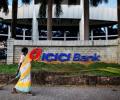
An in-line ICICI Bank result for the quarter ended March 31, 2024, has led to analysts raising target price and earnings per share (EPS) forecast on the stock. ICICI Bank, they said, appeared least vulnerable to regulatory action on its digital offerings or for risk monitoring lapses.

This is the fifth straight cut in rates by the Reserve Bank of India in as much policy reviews in 2019, and takes the total quantum of reductions to 1.35 per cent.
Banks' bad loans might cross Rs 10 lakh crore by the end of this fiscal, mainly on account of slippages in retail and MSME sectors, a study said on Tuesday. "NPAs are expected to rise to 8.5-9 per cent by March 2022, driven by slippages in retail, Micro, Small and Medium Enterprise (MSME) accounts, besides some restructured assets," the study by industry body Assocham and ratings firm Crisil said. The study titled 'Reinforcing the Code' said the Gross Non-Performing Assets (GNPAs) of banks are expected to cross Rs 10 lakh crore by March 2022.

It is clear as daylight to anyone that a charge or a cost to simply reduce interest on a floating rate loan is extortion, but this is exactly what the RBI has officially sanctioned, says Debashis Basu.

Besides the pandemic that resulted in higher interest rates, the default by Future Retail has dealt a blow to investor sentiment.

With slippages increasing every quarter, any derailment on growth or change in customers' repayment behaviour after moratorium may impact the overall asset quality. Correction, though, presents attractive buying opportunities, given the bank's sustained leadership position.

While slowdown was prominent in vehicle loan segment, home loans growth improved to 18.7% in May 2019 from 15.5% a year ago.
